


How Do Forests Regenerate? Natural Regeneration and Climate Resilience

Most of the time, nature manages remarkably well on its own. In forests, natural regeneration is fundamental. People sometimes support this process through light-touch interventions and, at other times, through more intensive restoration plans. Just like forest protection itself, regeneration matters greatly in today’s changing climate.

What is natural forest regeneration?
Based on the ecosystem’s own biological cycles, natural regeneration is the ability of a forest to renew itself spontaneously. This happens through seeds produced by trees already growing on the site, especially mature seed trees. Seeds may be carried by wind or dispersed by animals living in and around the forest.
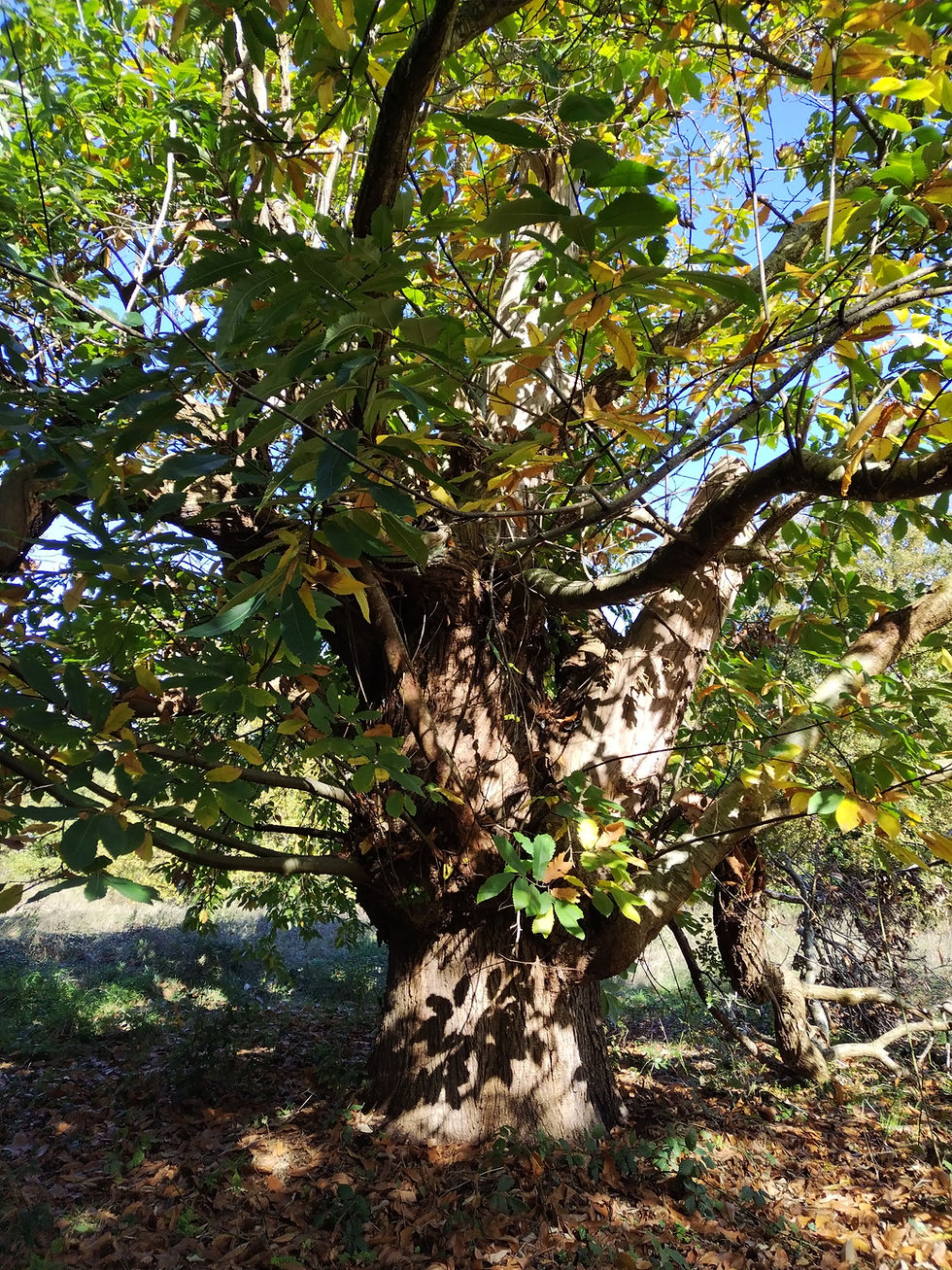
Some species, including many oaks, are also able to resprout directly from stumps or roots after cutting or low-intensity fire. Fire can even be part of the natural regeneration cycle in some ecosystems—see our article on fire-adapted trees. This is especially true of certain fire-adapted pines with serotinous cones, whose cones open in response to heat and release seeds into newly opened habitat. Ash can also temporarily alter soil nutrient availability, although the ecological effects of fire vary greatly with intensity, frequency and ecosystem.
Natural regeneration is primarily driven by ecological processes, but foresters sometimes support it with regeneration cuts, as explained by France’s National Forest Office (ONF). The aim is to bring more light to the forest floor so that naturally established seedlings can survive and grow. In France, natural regeneration accounts for a large share of forest renewal.
Assisted Natural Regeneration (ANR)
Alongside natural regeneration and conventional planting, there are alternatives to starting a forest entirely from planted seedlings. One of them is Assisted Natural Regeneration (ANR), an ecological restoration approach that sits between leaving a site completely unmanaged and planting a new forest from scratch. Its guiding idea could be summed up as: “protect what is already trying to grow”.
Nature makes haste slowly.
Carl Linnaeus
The principle of ANR is simple: instead of planting new trees everywhere, support the trees and shoots already present. Even degraded land may contain living roots, stumps capable of resprouting and dormant seeds. The first task is to identify promising young growth—ideally the most vigorous—and then intervene only where needed to improve its chances of survival. That can mean protecting young trees from grazing animals, browsing wildlife, repeated fire or other local pressures.
Selective cutting may also be used to reduce competing vegetation, for example vines, dense ferns or brambles that can overwhelm young trees in some restoration contexts.
In the early 1980s, Australian agronomist Tony Rinaudo helped develop and popularise Farmer Managed Natural Regeneration in Niger. The approach has since been associated with the restoration of several million hectares of degraded land and the return of hundreds of millions of trees across parts of the Sahel. In 2020, a practical manual on assisted natural regeneration was made freely available online for project managers and restoration practitioners.
Assisted natural regeneration is now a rapidly developing field within ecological restoration, with successful applications in many regions and a wide range of possible interventions. This is also reflected in publications from the Food and Agriculture Organization of the United Nations (FAO).
What role can regeneration play in a warming climate?
Protecting forests is essential in a warming climate, but helping forests recover is equally important. Assisted natural regeneration can also be far less expensive than large-scale planting in suitable contexts, because it works with existing ecological processes rather than replacing them.
Beyond biodiversity and water regulation, forests also store and absorb large amounts of carbon. Old and primary forests can hold enormous carbon stocks, while mature and old-growth forests are especially important reservoirs. Regenerating and secondary forests can absorb carbon rapidly during growth, although their carbon balance varies widely with climate, species, disturbance history, soils and management. There is no single rule that applies to every young or secondary forest.
Effective climate action therefore depends on protecting existing forests while also supporting recovery where forests have been degraded. In broad terms, conserving carbon-rich old forests avoids major emissions, while recovering forests can rebuild biomass and ecosystem function. Ideally, future forest strategies will combine both approaches: strong protection for primary and old-growth forests, alongside well-designed natural regeneration and restoration of degraded landscapes.
What forest regeneration can teach us about our own capacity to begin again
Forests carry an ancient wisdom: the ability to begin again 🌱
Even after storms, fires or human disturbance, a forest seeks light, activates biological processes below and above ground, and gradually allows life to return. Watching a forest regenerate can remind us that transformation, resilience and renewal also belong to our own lives.
Forest therapy invites us to slow down enough to notice this intelligence of the plant world, reconnect with our place in nature and rediscover a more grounded, living inner space.
If you would like to explore this sensitive and spiritual relationship with trees in greater depth, discover my five-day spiritual forest therapy training at the Ranch in Mouzeil, between Nantes and Angers.
And if you would like to offer someone a deeply restorative experience, gift cards for forest therapy walks are also available on the website 🍃✨


Comments